Varginha Incident
Residents of Varginha, Brazil, report encounters with unusual beings following a reported craft crash in the surrounding countryside. The Brazilian military conducts operations in the area while officials attribute the sightings to a homeless man with a known condition.
Videos
Background
In January 1996, the Brazilian city of Varginha in Minas Gerais became the focus of one of Latin America’s most discussed UAP cases.
Initial Sighting
On January 13, a local geography teacher and ultralight pilot reported seeing a cylindrical craft trailing smoke as it descended outside the city.
The Incident
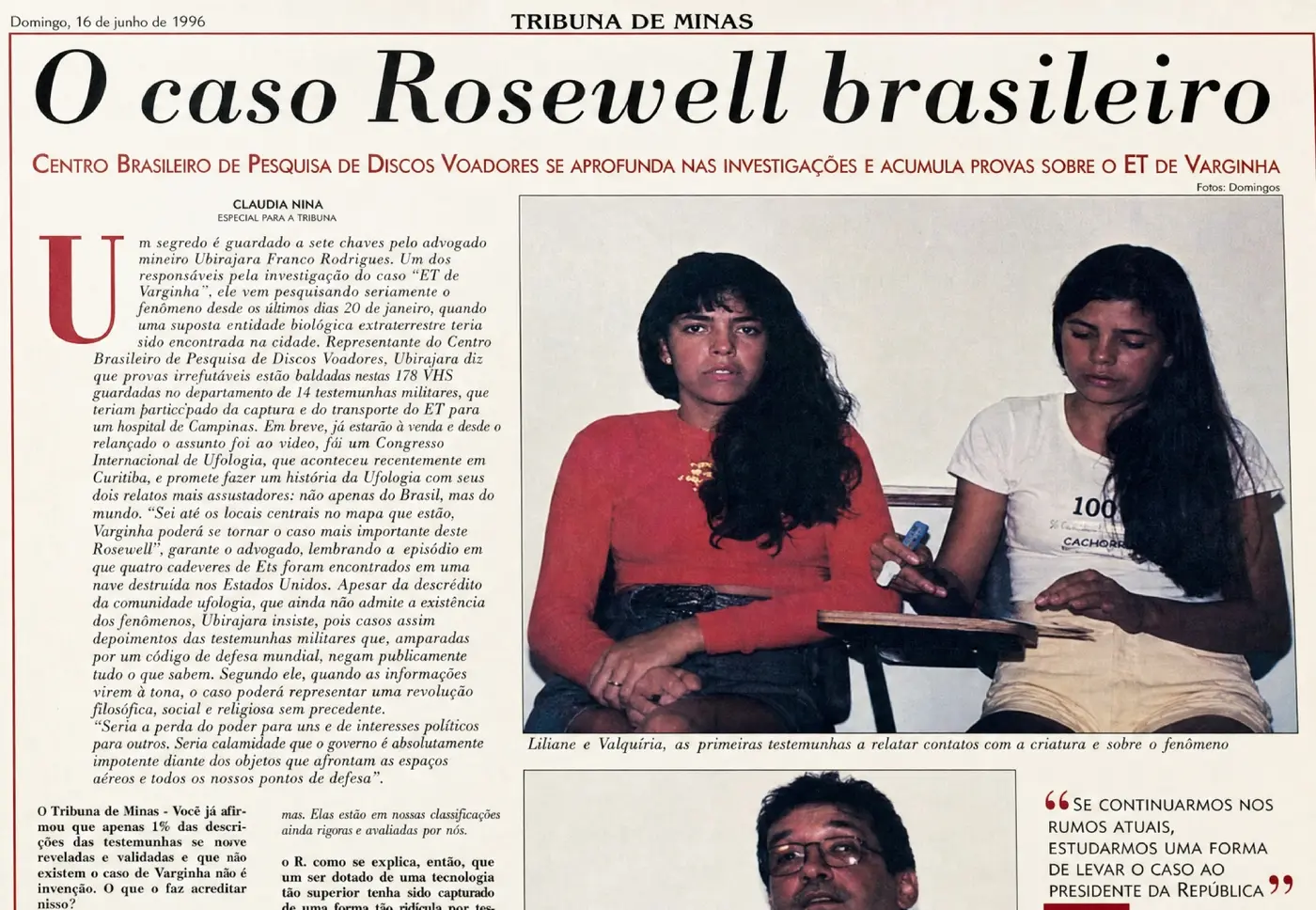
One week later, on the afternoon of January 20, two girls and a young woman — commonly reported as 14, 16 and 22 years old — encountered what they described as a non-human creature in a vacant lot near a residential neighborhood.
They described a small figure with a disproportionately large head, dark brown skin with vein-like patterns, large red eyes and three raised protrusions on its head. According to their account, the creature appeared disoriented or injured.
Military Response
Within hours, military and fire department personnel were reportedly seen conducting operations in the area. Over the following days, additional witnesses came forward with accounts of similar events at different locations around the city.
Investigation
The Brazilian Army investigated the case and concluded that the witnesses had likely seen a local homeless man known as Mudinho, whose appearance was reportedly affected by a medical condition. Many witnesses and residents rejected that explanation and maintained that what they saw did not appear human to them.
Significance
The case generated sustained national media coverage and drew international investigators. Later documentaries and public appearances made Varginha known beyond Brazil; at the same time, the central claims around recovery, hospital activity and the military remain officially denied and difficult to verify independently.
Significance
The Varginha incident is the most prominent UAP case from South America, often described as Brazil's Roswell. Its significance lies in the large number of independent witnesses, the consistent descriptions across separate encounters, and the documented military response. The case's 2026 presentation to U.S. Congress marked a new phase in international UAP discourse, demonstrating that significant cases from outside the United States are beginning to receive formal institutional attention.